Laboratory Culture
What Are Water Baths Used For? Common Lab Applications
Updated 2026-06-13 · Hotech Technical Team
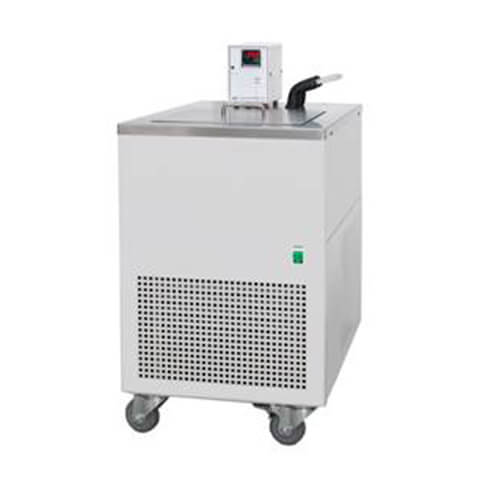
In short
A constant-temperature water bath uses water as a uniform heat medium to provide a stable, even temperature, widely used for reagent warming, incubation, enzyme reactions, serum inactivation, thawing and instrument calibration — anything needing precise, uniform temperature.
Why water as the medium
- Water's high heat capacity and good conductivity keep the bath uniform and stable, ideal for constant-temperature work.
Common uses
- Warming reagents and media, incubation, enzyme reactions (e.g., 37°C), serum inactivation (often 56°C), specimen thawing, tissue-section flotation, and thermometer/probe calibration.
Types of water baths
- Standard baths, shaking baths, low-temperature circulators and tissue-flotation baths — choose by need for agitation, circulation or low temperature.
Related Products
- Water Bath 810-S1/810-S2 →
- Reciprocating Shaking Water Bath 903/903XL →
- Tissue Flotation Water Bath 522 →
FAQ
What is the temperature range?
It varies by model; standard units run from above room temperature to about 100°C, while low-temperature needs use a circulating chiller bath.
Shaking bath vs. standard bath?
A shaking bath adds reciprocating or orbital agitation, suited to applications needing mixing or faster reactions.
What water should I use?
Use distilled or deionized water to reduce scale and impurities and extend equipment life.