Temperature & Optics
What Is Temperature Measurement Uncertainty?
Updated 2026-06-13 · Hotech Technical Team
In short
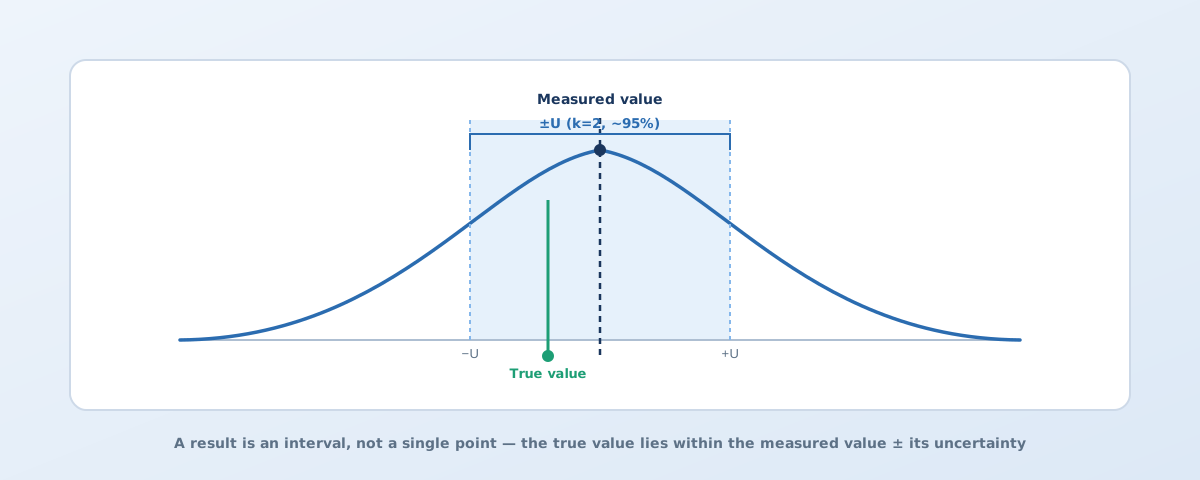
Measurement uncertainty is the range of possible error in a temperature result, reflecting the confidence that the true value lies within an interval. No measurement is perfectly accurate; uncertainty quantifies reliability and is key to reading calibration reports.
Where uncertainty comes from
- Instrument resolution and noise, sensor drift, ambient conditions, human factors and the uncertainty of the reference standard itself all contribute to total uncertainty.
Uncertainty vs. error
- Error is the difference from the true value, which is usually unknown; uncertainty is a scientific estimate of the possible range. Results are commonly reported with a ± value, coverage factor k and coverage probability. When the distribution is approximately normal and the effective degrees of freedom are sufficiently large, k=2 usually corresponds to approximately 95% coverage.
How to reduce uncertainty
- Use higher-grade, traceable standards (e.g., high-uniformity blackbodies).
- Calibrate regularly, control the environment, and repeat measurements.
- Ensure results are traceable to national or international standards.
Related Products
FAQ
Uncertainty vs. error?
Error is the difference from the usually unknown true value; uncertainty estimates the possible range and should be reported with a ± value, coverage factor k and coverage probability.
Is smaller uncertainty always better?
Within requirements, smaller means more reliable, but achieving it needs higher-grade standards and stricter conditions — balance against cost.
How to reduce uncertainty?
Use traceable high-grade standards, calibrate regularly, control the environment and repeat measurements.