How to Choose a Water Bath: Standard, Shaking, Chiller or Flotation
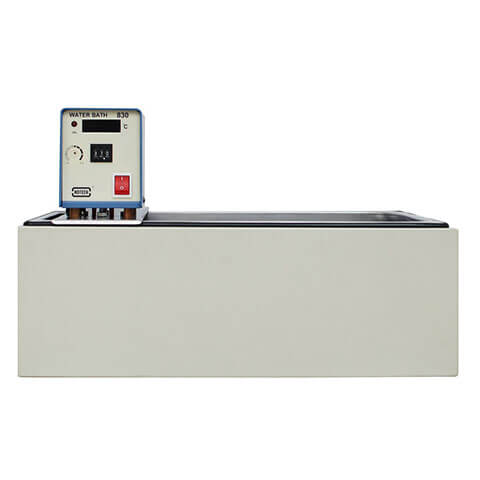
A water bath is chosen by application type: a standard bath for plain constant temperature (810/830/836); a shaking bath for mixing or faster reactions (902/903); a chiller/circulator for below-room-temperature work (631–633); and a tissue-flotation bath for sectioning (522). Then refine by temperature range, capacity and stability.
Four types and their uses
- Standard bath (810/830/836): reagent warming, incubation, enzyme reactions, serum inactivation and general constant-temperature work.
- Shaking bath (902/903): constant temperature with agitation, for applications needing mixing or faster reactions.
- Chiller/circulator (631–633): below-room-temperature with external circulation, for cooling or externally-connected setups.
- Tissue-flotation bath (522): keeps the water surface at the right temperature for floating pathology sections.
Start with range and capacity
- Confirm the required temperature range (including any below-room-temperature need) and the sample volume handled at once, matched to bath capacity and heating/cooling power.
Key specifications
- Temperature range, stability, opening size and depth, and whether circulation or agitation is needed all affect the choice (see also: what water baths are used for).
Related Products
FAQ
Standard, shaking or chiller — how to choose?
Use a standard bath for plain constant temperature, a shaking bath for mixing or faster reactions, and a chiller/circulator for below-room-temperature or external circulation.
What capacity should I choose?
Base it on the number of samples or vessels handled at once and the opening size, leaving working margin.
Flotation bath vs. standard bath?
A flotation bath is designed for floating pathology sections with a calm, correctly-warmed surface; a standard bath is for general constant-temperature work.