How to Choose Platelet Storage: Integrated vs. Standalone Agitator
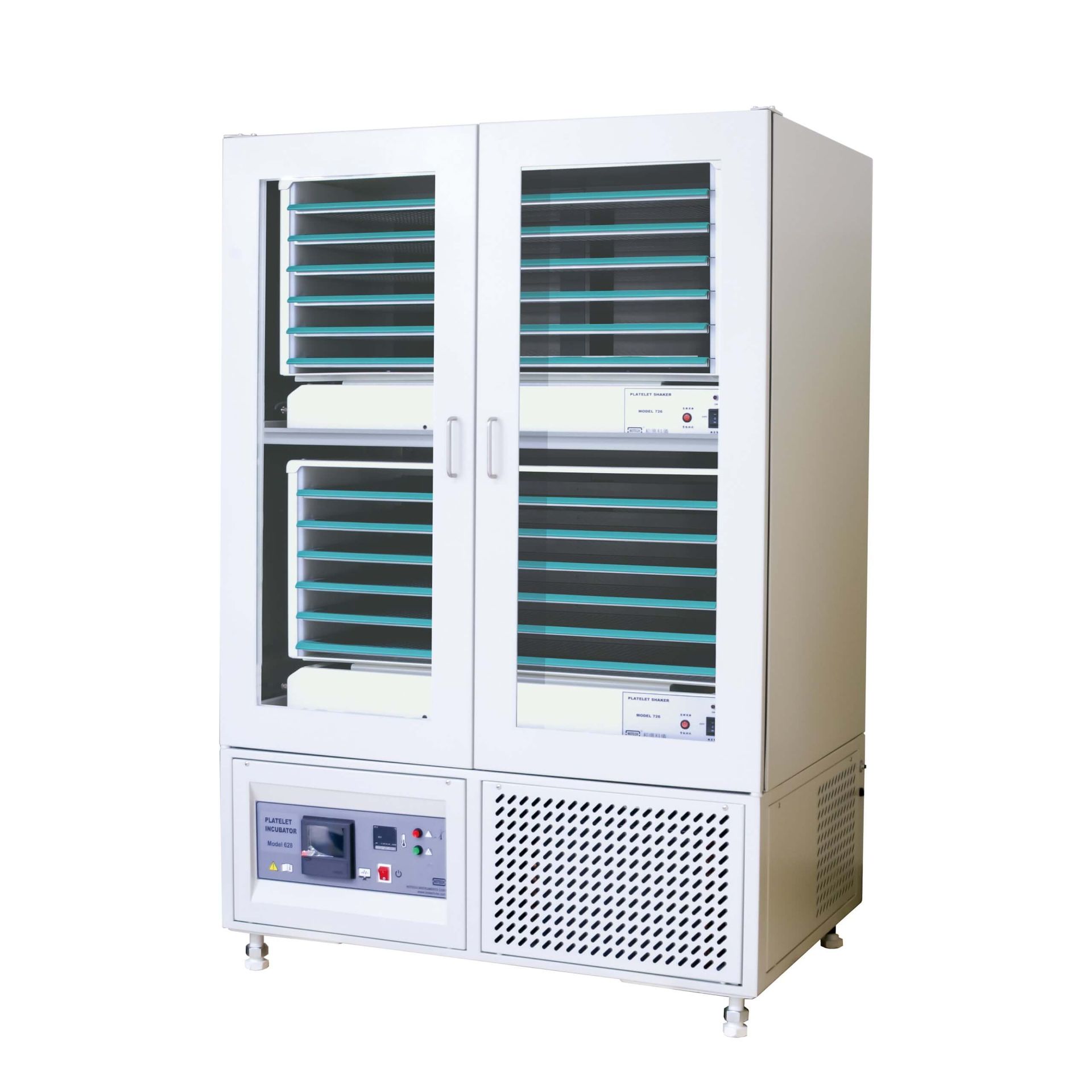
First consider whether you already have a temperature-controlled storage environment. For an all-in-one (constant temperature + agitation), choose an agitator-with-incubator — benchtop 626, floor-standing 627, or high-capacity 628 (20–24°C, ±0.1°C stability). If you already have controlled storage and only need agitation, choose a standalone platelet agitator, the 725 or 726 (70±3 rpm). The 626 and 627 are functionally identical, differing in benchtop vs. floor-standing space and capacity.
Two paths by need
- All-in-one agitator-with-incubator (626/627/628): integrates the incubator and platelet agitator, 20–24°C with ±0.1°C stability, power-failure alarm and USB/SD temperature logging.
- Standalone platelet agitator (725/726): agitation at 70±3 rpm, suited to units that already have constant-temperature storage and only need agitation.
Choosing space and capacity for the all-in-one
- Benchtop 626: for space-limited settings, with a built-in 725 agitator.
- Floor-standing 627: houses a standard 726 agitator with larger capacity; the 626 and 627 are functionally identical, differing in space and capacity.
- High-capacity 628: a floor-standing option when more units are needed.
Basic platelet storage conditions
- Platelets are generally stored at 20–24°C with continuous gentle agitation to maintain gas exchange in the bag and prevent settling (see also: why platelets need agitation).
Related Products
FAQ
Standalone agitator vs. agitator-with-incubator?
The agitator-with-incubator integrates incubator and agitation for units without a controlled environment; the standalone agitator provides agitation only, for those who already have constant-temperature storage.
How to choose between the 626 and 627?
They are functionally identical, differing in space and capacity: the benchtop 626 suits space-limited settings, while the floor-standing 627 has larger capacity and houses a standard 726 agitator.
Is the temperature log kept during a power outage?
The all-in-one units have a power-failure alarm and log temperature via USB/SD; actual behavior depends on the model, and a UPS backup is recommended.